Nigeria Decides 2027: The Curious Case of Kwara
As the road to Nigeria’s 2027 general elections gradually unfolds, most states appear to be moving through the usual political processes. In Kwara State, however, the journey has been anything but ordinary.
The ruling All Progressives Congress (APC), which once projected an image of unity and political dominance, suddenly finds itself navigating one of its most turbulent moments since taking power in 2019. Internal disagreements, controversial primary elections, allegations of imposition, and growing discontent among party stakeholders have transformed what should have been a routine transition into one of the most fascinating political stories in Nigeria today.
For political observers, opposition parties, and ordinary Kwarans alike, the APC primaries played out more like a political thriller than an internal party exercise. With every passing day came another twist, another reversal, and another unanswered question.
The Case for Kwara North
One of the biggest conversations leading into the governorship race centred around zoning.
Since the creation of Kwara State, seven elected governors have occupied the Government House. Many political stakeholders from Kwara North have consistently argued that the district has not enjoyed equitable access to the state’s highest office and that the time had finally come for power to shift northward.
Governor AbdulRahman AbdulRazaq publicly aligned himself with this sentiment. His position was clear: Kwara North deserved an opportunity to produce the next governor.
On the surface, this argument resonated with many. In a state built on diversity, inclusion remains an important political consideration. Yet, while many accepted the principle of power rotation, opinions differed sharply on who should ultimately fly the party’s flag.
The Myth of the Consensus Candidate
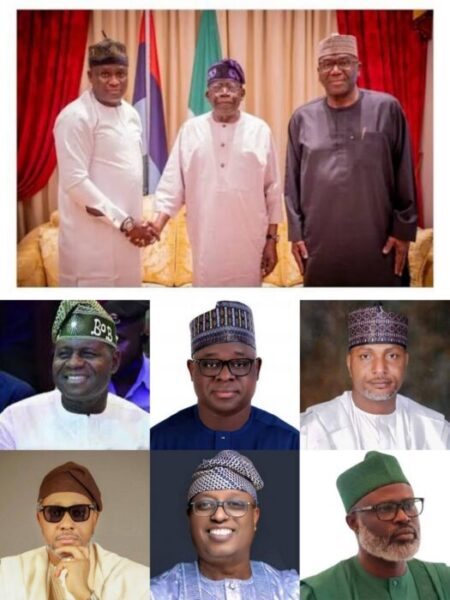
The APC governorship contest initially featured sixteen aspirants.
Forms were purchased, screening processes were completed, and the party appeared ready for what many expected would be a competitive primary election.
Then came the whispers.
Those whispers soon became public declarations about the emergence of a “consensus candidate.”
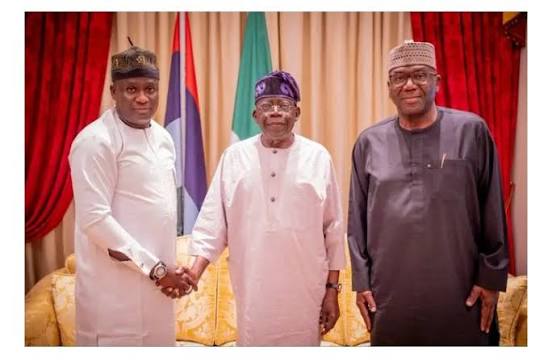
Governor AbdulRazaq initially made it known that he favoured the Speaker of the Kwara State House of Assembly, Yakubu Danladi-Salihu, as his preferred successor, citing the need for Kwara North to finally produce the state’s governor.
Just when many assumed the matter had been settled, another dramatic twist emerged.
The governor reportedly shifted his support to businessman Abdulfatai Yahaya Seriki, presenting him as the party’s consensus candidate.
Naturally, this announcement generated excitement within Yahaya Seriki’s camp. He returned triumphantly from Abuja to Kwara, receiving enthusiastic welcomes from supporters who already referred to him as the incoming governor.
Yet, before the dust could settle, another dramatic reversal occurred.
On the eve of the primaries, Yakubu Danladi-Salihu was once again presented as the preferred candidate and eventually emerged as the APC governorship candidate.
The rapid sequence of endorsements left many observers asking the obvious question:
Can someone truly be described as a consensus candidate if several other aspirants openly reject that consensus?
By definition, consensus implies collective agreement. Where significant opposition exists, many would argue that what exists is not consensus but imposition.
That distinction has become one of the defining debates surrounding the APC primaries in Kwara.
Beyond the Governorship: Controversies Across the Primaries
The governorship race was not the only contest surrounded by controversy.
Reports of disputes also emerged from the House of Representatives and Kwara State House of Assembly primaries.
Some aspirants alleged that they were denied accreditation. Others claimed election materials never arrived in their constituencies, making voting impossible. Despite these complaints, candidates widely perceived to enjoy the support of the state leadership were eventually declared winners.
Whether these allegations are ultimately upheld or dismissed, the perception among many party members is that the playing field was uneven.
And in politics, perception often becomes just as powerful as reality.
The Senatorial Puzzle
The senatorial contests introduced another layer of intrigue.
All three serving senators representing Kwara were initially reported to have pursued the APC governorship ticket.
Ordinarily, many expected that if they were unsuccessful in that race, they might receive the opportunity to seek re-election to their respective Senate seats—a practice that has occurred in different political contexts.
Instead, fresh names emerged in some of the senatorial contests.
This development fuelled further speculation that a broader political realignment was taking place within the party and deepened dissatisfaction among several influential stakeholders.
The Emergence of the G15
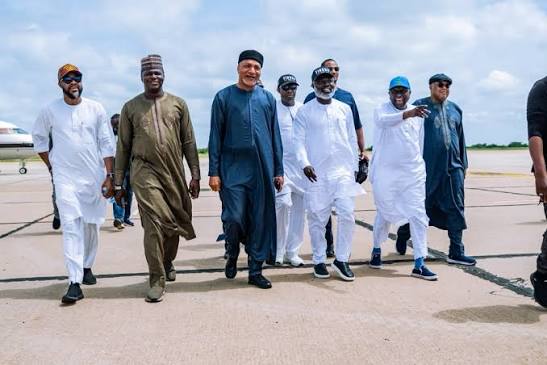
The aftermath of the primaries produced what may become one of the defining political movements of this election cycle.
The aggrieved Fifteen governorship aspirants united in opposition to the outcome of the APC primaries.
Their alliance, now popularly referred to as the G15, has embarked on consultations and public engagements to express dissatisfaction with the conduct and outcome of the party’s internal processes.
Their central argument is straightforward: they believe the primaries did not reflect a transparent and competitive democratic exercise.
Could this be a relaunch of the ‘O to ge’ movement?
Whether this coalition remains united or eventually fragments could significantly shape the APC’s fortunes heading into the general election.
The PDP Senses an Opportunity
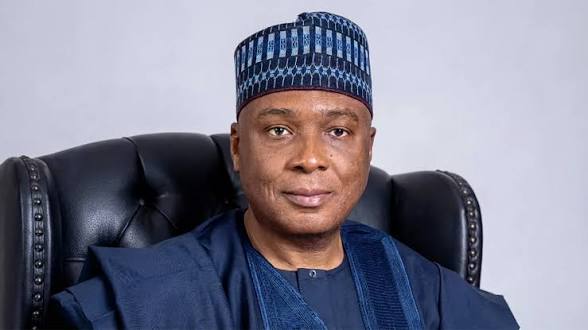
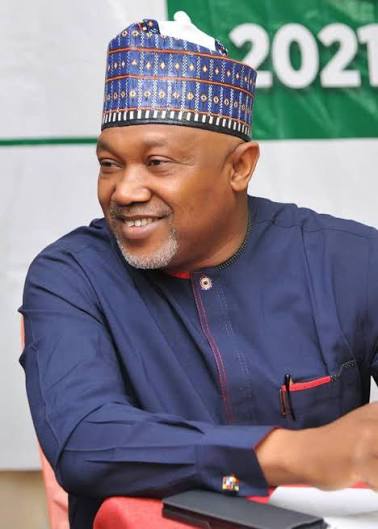
While the APC has grappled with internal disagreements, the Peoples Democratic Party (PDP) has quietly repositioned itself.
Led politically by former Senate President and former Kwara State Governor, Abubakar Bukola Saraki, the party appears determined to capitalise on the cracks within the ruling APC.
For sixteen years, the PDP controlled Kwara politics before the emergence of the “O To Ge” movement dramatically altered the state’s political landscape in 2019.
Now, six years later, the party believes history may be presenting another opportunity.
The PDP has presented Bolakale Kawu as its governorship candidate and subsequently announced a Christian running mate, Pastor Cornelius Fawenu as Deputy Governor, a move widely interpreted as an attempt to appeal to sections of the electorate that have expressed concerns about inclusion and representation.
Whether that strategy translates into electoral success remains to be seen, but politically, it represents a calculated effort to broaden the party’s appeal.
The Dark Horse
Every election cycle has one, ‘The unexpected candidate’.
The individual who quietly gathers momentum while the major contenders dominate the headlines.
Political analysts often refer to such a figure as the “dark horse”—someone who may not initially be considered the favourite but possesses the network, credibility, or political backing to surprise everyone.
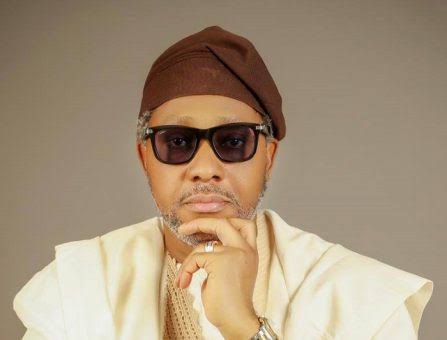
One name frequently mentioned in political circles is Engr. Olufemi Sanni.
An entrepreneur, and business executive with decades of leadership experience across engineering, telecommunications, consulting, and corporate management, Sanni currently serves as the Managing Director and Chief Executive Officer of the Stefolga Group.
His relationship with influential political actors has naturally generated speculation about his future political role.
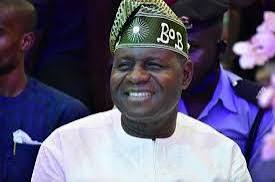
Another frequently mentioned name is Bashir Omolaja Bolarinwa (popularly known as BOB), a former APC State Chairman and one of the notable figures associated with the O To Ge movement that helped usher the APC into power in Kwara.
Political rumours have linked him with influential figures within the national leadership of the APC, though politics has repeatedly shown that rumours do not always become reality.
Then again, judging by how unpredictable this election season has already become, perhaps the real dark horse has not even entered the race yet.
At this rate, the dark horse could be me—or even you!
Politics, after all, has a remarkable way of surprising everyone.
Beyond Personalities: The Real Conversation
While personalities, alliances, and political drama dominate today’s headlines, they should not overshadow the larger conversation.
The real issue is governance.
Kwara deserves a leader prepared for the realities of today’s world.
✅ A leader with a clear economic and development vision.
✅ A leader who can attract investment.
✅ A leader who understands technology and innovation.
✅ A leader who will prioritise Security, infrastructure, education, healthcare, agriculture, industrialisation, and job creation.
✅ Most importantly, Kwara deserves a governor who sees the entire state—not just its capital.
The current administration has undoubtedly executed projects and recorded achievements. However, many residents outside Ilorin continue to question whether development has reached every part of the state equally.
Kwara is far bigger than Ilorin.
It stretches across the North, South, and Central Senatorial Districts.
Communities like my own hometown of Oke-Onigbin, along with many others across the state, still struggle with roads that have remained largely unchanged for decades. Many rural communities continue to lack the infrastructure expected in a modern economy.
Our villages should not remain permanently frozen in time.
Our towns should continue evolving.
Development should not stop at the state capital.
Across Nigeria, we have seen states investing heavily in road networks, industrial hubs, technology ecosystems, tourism, agriculture, and urban renewal. Kwarans deserve to be part of that story too.
Looking Ahead
As 2027 approaches, the political landscape in Kwara remains one of the most fluid and unpredictable in the country.
Will the APC successfully heal its internal divisions? Can the G8 reshape the political equation? Will the PDP capitalise on the ruling party’s challenges? Or will an entirely unexpected candidate emerge to rewrite the script?
Only time will tell.
One thing, however, is certain.
The conversation should move beyond geography, political camps, and personalities. The debate should be about competence, vision, integrity, inclusion, and the ability to develop every corner of Kwara State. Zoning may help promote fairness, but good governance must remain the ultimate goal.
Kwarans deserve leadership that sees every local government, every town, every village, and every citizen as equally important.
As the political drama continues to unfold, one can only hope that, when the dust finally settles, the biggest winner will not be a political party or an individual politician—but the people of Kwara State themselves.
Beyond The Drama
As for me, I’ll be sitting comfortably with my popcorn because this political series has already given us enough plot twists for an entire Netflix season—and we’re not even at the general election yet.
But jokes aside, this election is too important to be reduced to political entertainment.
Beyond the rallies, endorsements, defections, and declarations lies the future of millions of Kwarans. This is about the farmer in Kaiama, the trader in Offa, the teacher in Patigi, the student in Ilorin, and the grandmother in my beloved Oke-Onigbin who simply wants good roads, quality healthcare, electricity, security, and opportunities for her children and grandchildren.
Let’s argue. Let’s debate. Let’s campaign. But when all the noise dies down, let’s choose competence over sentiment, vision over slogans, and leadership over loyalty.
Because at the end of the day, governors don’t govern districts—they govern states.
And Kwara deserves nothing less.
Until the next episode of “As Kwara Turns”…
I’m Aunty Lulu, and I’ll be watching.👀
Recommended
Kwara 2027 Gubernatorial Race: Early Contenders, Rankings & Political Analysis
Politics 101 – “From silence to responsibility.”
Kwara 2027 Gubernatorial Race: Early Contenders, Rankings & Political Analysis


Abioye Aunty LuluThank you my sister for your write up, I’m reading your script for the 1st time, Kudos
I’m also from Oke-onigbin love to relate with you.
Stay blessed .
Good morning,
Thank you for your comment. I’m glad you enjoyed it.
Aunty Lulu
Thanks
Lovely write up with great indepth…