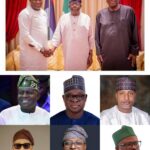
Kwara 2027: Early Look at Gubernatorial Aspirants
Following the release of the timetable for the 2027 general elections by INEC, it is clear that the political season has officially begun.
With timelines now in place, there should be no delays in identifying and narrowing down credible candidates. While the real contest intensifies after party primaries (expected around April/May), it is equally important to begin paying attention now.
As promised, here is an update on the early contenders in the Kwara State gubernatorial race. However, before we assess the candidates, it is essential to first address the question of zoning.
Zoning vs Merit in the Kwara 2027 Gubernatorial Race
The first questions many observers are asking are straightforward but significant: Is there an informal rotation expectation between Kwara North, Central, and South? And if so, which zone is politically “due” to produce the next governor?
At the same time, another school of thought pushes back on this logic entirely: Should zoning even matter if the most competent and capable candidate emerges from a different region?
These are not just theoretical debates—they reflect real sentiments among voters and political stakeholders across the state. On one hand, zoning is often seen as a tool for equity, inclusion, and balance in a diverse political landscape. On the other, there is a growing argument that governance outcomes—not geography—should take priority.
Both perspectives carry weight, and as the race develops, they will likely shape alliances, messaging, and ultimately voter decisions.
For now, however, it may be premature to take a definitive position on zoning. The political field is still forming, and before drawing conclusions, it is important to first understand who the contenders are, what they bring to the table, and how they are positioning themselves.
With that in mind, let us begin by examining the aspirants within the ruling party, the APC—where early activity, internal competition, and structural advantage suggest that the eventual frontrunner is most likely to emerge.
Zoning is a conversation we will return to. But first, the players.
1. Sen. Lola Ashiru (Kwara South – APC)

Senator Lola Ashiru represents Kwara South Senatorial District under the All Progressives Congress (APC). He is also the Chief Executive Officer of Capital Projects Limited, a real estate firm with operations across Lagos, Abuja, and parts of West Africa.
Sen. Ashiru initially pursued his senatorial ambition under the People’s Democratic Party (PDP) in 2018 but later defected to the APC alongside other stakeholders in a move to challenge the long-standing political structure in Kwara State.
He won the 2019 senatorial election with a significant margin and has since maintained a strong presence in the National Assembly. In the 9th Senate, he served as Vice Chairman of the Senate Committees on Housing and Public Procurement.
In the 10th Senate, his leadership profile has continued to rise:
- Appointed Deputy Chief Whip (July 2024)
- Elevated to Deputy Senate Leader (October 2024)
- Chairman, Senate Ad-hoc Committee on abandoned federal projects
His roles reflect a focus on governance, accountability, and legislative coordination.
Strengths
- Strong legislative experience and rising influence in the Senate
- Holds strategic leadership positions (Deputy Senate Leader)
- Backed by APC structure and political alignment
- Business background adds administrative perspective
Potential Weaknesses
- May face regional balancing concerns (Kwara South dynamics)
- Public perception beyond legislative circles may need strengthening
- Association with party politics may attract both loyalty and criticism
Political Outlook
Sen. Ashiru’s growing influence at the national level positions him as a serious contender. However, his success will depend on how well he translates federal experience into grassroots appeal within Kwara.
Scorecard
- Political Structure: 7/10
- Experience & Competence: 6/10
- Public Appeal: 5/10
- Electability: 5/10
- Momentum: 5/10
Total Score: 28/50
Quick Insight
A strong establishment candidate with significant national influence and momentum. His major advantage lies in experience and positioning within the Senate.
2. Sen. Sadiq Umar (Kwara North – APC)

Senator Sadiq Umar represents Kwara North Senatorial District and is widely regarded for his background in public health and development work.
A trained pharmacist, he holds multiple academic qualifications including degrees in Pharmacy, Public Administration, and Disaster Risk Management from Ahmadu Bello University.
Before politics, he spent nearly two decades working with international development organisations such as DFID, USAID, and Axios International, rising to the position of Technical Director for West Africa.
In the Senate:
- Former Chairman, Senate Committee on Rules and Business (9th Senate)
- Current Chairman, Senate Committee on Trade and Investment (10th Senate)
- Also serves on multiple key committees including Appropriation, Finance, Defence, and ICT
His legislative priorities include:
- Education
- Healthcare
- Infrastructure
- Human capital development
- Youth empowerment
Strengths
- Strong technocratic and development background
- Extensive experience in international development (DFID, USAID)
- Broad committee exposure in the Senate
- Appeals to policy-driven and youth-focused voters
Potential Weaknesses
- May be perceived as more technocratic than political
- Grassroots political structure strength will be key
- Needs to convert policy credibility into mass appeal
Political Outlook
Sen. Sadiq Umar brings competence and depth, particularly in development and public health. His challenge will be bridging the gap between expertise and political mobilisation.
Scorecard
- Political Structure: 5/10
- Experience & Competence: 6/10
- Public Appeal: 5/10
- Electability: 6/10
- Momentum: 5/10
Total Score: 27/50
Quick Insight
Highly competent and policy-driven, with strong development credentials. His challenge will be converting expertise into broader political appeal.
3. Sen. Saliu Mustapha (Kwara Central – APC)

Senator Saliu Mustapha represents Kwara Central Senatorial District and is a member of the APC. He previously served as Deputy National Chairman of the Congress for Progressive Change (CPC), one of the legacy parties that formed the APC.
Born in Ilorin, Kwara State, he has an educational background in Mineral Resources Engineering from Kaduna Polytechnic.
His political experience spans party administration and legislative representation, positioning him as a notable contender from Kwara Central.
Strengths
- Strong party background and administrative experience
- Strategic positioning within APC legacy structure
- Represents Kwara Central, a politically critical zone
Potential Weaknesses
- Lower legislative visibility compared to some peers
- Needs stronger public-facing political narrative
- Competition within Kwara Central may be intense
Political Outlook
Sen. Mustapha’s strength lies in party structure and positioning. His trajectory will depend on how effectively he builds broader visibility and consolidates support within and beyond his background.
Scorecard
- Political Structure: 7/10
- Experience & Competence: 5/10
- Public Appeal: 5/10
- Electability: 5/10
- Momentum: 7/10
Total Score: 29/50
Quick Insight
Strategically positioned within party structures, especially in Kwara Central. Needs stronger visibility and narrative to stand out.
Yahaya Seriki (APC – Kwara Central)

Profile
Born on October 8, 1975, Yahaya Seriki is an APC chieftain from Ilorin, Kwara State. He is a businessman and philanthropist, and the Founder/Managing Director of Kursi Investments Limited.
Strengths
- Strong grassroots influence, particularly in Kwara Central
- Recognised for philanthropy and community engagement
- Financial capacity and independence
- Youth appeal and energetic political presence
- Established loyalty base within APC circles
Potential Weaknesses
- Limited legislative or executive governance experience
- May face challenges within party structure against more established office holders
- Perception as a political outsider in terms of formal public office
Political Outlook
Yahaya Seriki represents a different kind of candidacy—one rooted more in grassroots connection and philanthropy than in formal political office.
His strength lies in his ability to mobilise people and maintain strong community ties. However, his viability will depend on how well he translates this goodwill into structured political support within the APC and across the state.
Scorecard
- Political Structure: 5/10
- Experience & Competence: 3/10
- Public Appeal: 5/10
- Electability: 5/10
- Momentum: 7/10
Total Score: 25/50
Quick Insight
A strong grassroots contender with notable popularity and financial backing. If he successfully strengthens his political structure and broadens his appeal beyond core supporters, he could emerge as a serious force in the race.
Early Observations Across the Field
- APC dominance: A significant number of aspirants are within the APC, making the primary election highly competitive
- Zoning dynamics will likely play a critical role
- Experience vs relatability: Candidates vary between technocrats and grassroots politicians
- Structure will matter more than popularity
This analysis is only the beginning of a deeper evaluation process.
As more details emerge and the political landscape becomes clearer, factors such as alliances endorsements and public sentiment will play an increasingly decisive role.
Subsequent parts will expand this analysis to include other aspirants, as well as a broader comparison across party lines.
At this stage, the race is less about popularity and more about structure, alliances, and delegate control. As the primaries approach, these—not public perception—will determine who truly stands a chance
Final Thoughts
While the list is expected to evolve as more aspirants declare their intentions, this provides an early snapshot of the political landscape ahead of the 2027 gubernatorial race in Kwara State.
As the primaries approach, the focus will shift from declarations to strategy, alliances, and ultimately, electability.
For now, the responsibility lies with us as citizens to stay informed, ask questions, and critically assess those who seek to lead.
As you reflect on all of this, remember…
Leadership is not just about who runs—it’s about who is ready.
Stay informed. Stay thoughtful. Stay engaged.
The decisions we make today quietly shape the future we step into tomorrow.
With grace, clarity, and quiet wisdom,
Aunty Lulu 💛
Reccommended
Politics 101 – “From silence to responsibility.”