
Is Privilege Stealing the Common Man’s Chance?
I came across a post on Instagram recently that really got me thinking.
The post was complaining about what it called “the nepo baby takeover.” Its argument was simple: even the so-called low-hanging fruit — the opportunities and professions that were once accessible to ordinary people — are increasingly being taken over by children from wealthy, famous and influential families.
At first, I thought, Hmm. Is it really that serious?
Then, shortly afterwards, I came across an article discussing the US Open (tennis) and the privileged backgrounds of some of the players, and it brought that Instagram post straight back to my mind.
Could there actually be something to this argument?
When Some Careers Were “Not For Our Children”
There was a time when certain professions simply weren’t considered desirable by the elite.
If you came from a wealthy or highly educated family, there were careers you were expected to pursue. Medicine. Law. Banking. Engineering. Business. Perhaps politics.
Entertainment? Football? Becoming a comedian? Dancing for a living? God forbid! 😂
I remember when choosing a career in music, modeling or acting could cause a full-blown family meeting. Reality television would probably have finished your parents completely.
Content creation wasn’t even a recognized profession, and telling an African parent that your career ambition was to become an “influencer” might have required the intervention of the extended family and the church.🙆🏽♀️
Those worlds largely belonged to people willing to take the risk — and very often, everyday people, people without privileged access.
Sport was similar.
Of course, some sports have historically required significant financial resources. Motorsport, golf, equestrian sports and fencing immediately come to mind.
Tennis has always had a mixture, but football, basketball, boxing and athletics have traditionally provided some of the great rags-to-riches stories of our time.
A child could kick a ball exceptionally well on an ordinary field and, just maybe, talent would take him somewhere. The dream was simple: you may not have money, but perhaps your talent could become your currency. And that is where this new conversation becomes interesting.
What Happens When Money/Priviledge Enters the Talent Business?
Today, affluent parents are investing heavily in the very careers previous generations might once have dismissed.
Your child shows some ability in football? Get him into an elite academy.
She likes tennis? Find the best coach.
He wants to act? Acting school, private lessons, an agent and professional headshots.
She wants to become a content creator? Cameras, lighting, editing, styling, PR and perhaps an introduction to the right people.
There is absolutely nothing wrong with any of this. In fact, isn’t that what good parents do? If you have the resources to support your child’s dream, why wouldn’t you? But this is where the argument about privilege begins.
Two children may possess exactly the same amount of raw talent, but one starts the race several metres ahead. One has to be discovered. The other can be developed.
One needs somebody to take a chance on them. The other can afford years of training until they are ready.
One sends an email and hopes somebody opens it. The other’s parent knows the person the email was sent to.
That doesn’t automatically make the privileged child less talented. But surely we can admit that the journey isn’t the same.
The Difference Between a Nepo Baby and a Silver-Spoon Baby
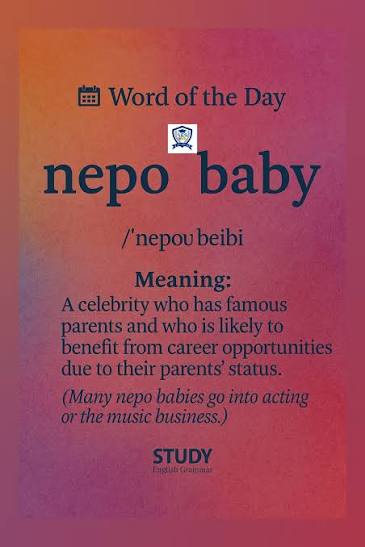
Like we do with so many words these days, “nepo baby” has become one of those terms we throw around rather loosely
Strictly speaking, nepotism is about benefiting from family relationships and connections. If your mother is an actress and those relationships help you get an audition, the nepo conversation makes sense.
But being born wealthy isn’t necessarily nepotism. Sometimes the advantage isn’t a famous surname. It is money.
- Money buys time.
- Money buys lessons.
- Money buys equipment.
- Money pays for travel to competitions and auditions.
- Money allows you to take an unpaid internship.
- Money allows you to spend two years “finding yourself” while someone else pays the rent.
- And perhaps most importantly, money gives you room to fail.
That last one is rarely discussed.
For someone from an ordinary background, pursuing a dream can carry enormous consequences.
At some point, passion has to start paying bills. You may have younger siblings depending on you. Parents who have sacrificed for your education. Rent to pay. Responsibilities waiting.
A wealthy child may be able to fail at one venture, regroup, retrain and try something else. That safety net is itself an enormous privilege.
When Being Rich Became Cool

For me, Paris Hilton represents an interesting turning point in popular culture. Paris was an heiress who didn’t remain quietly in the background enjoying inherited wealth. She became the product.
When The Simple Life arrived in 2003 with Paris Hilton and Nicole Richie — two young women already associated with wealth and famous families — their privilege wasn’t something television tried to hide.
It was the premise. Two wealthy socialites were sent to experience ordinary jobs and ordinary life, and millions watched.
Suddenly, being an heiress wasn’t merely about having money. You could have the money and the fame. And I think something shifted culturally.
Previous generations of wealthy children might have been expected to join the family business or disappear into respectable professions. Increasingly, wealthy children also wanted visibility.
They wanted music careers. Fashion, Acting. Reality television. Influencing. Sports. They didn’t just want to own the entertainment company. They wanted to be on the stage too.
And why shouldn’t they?
Then Came Davido
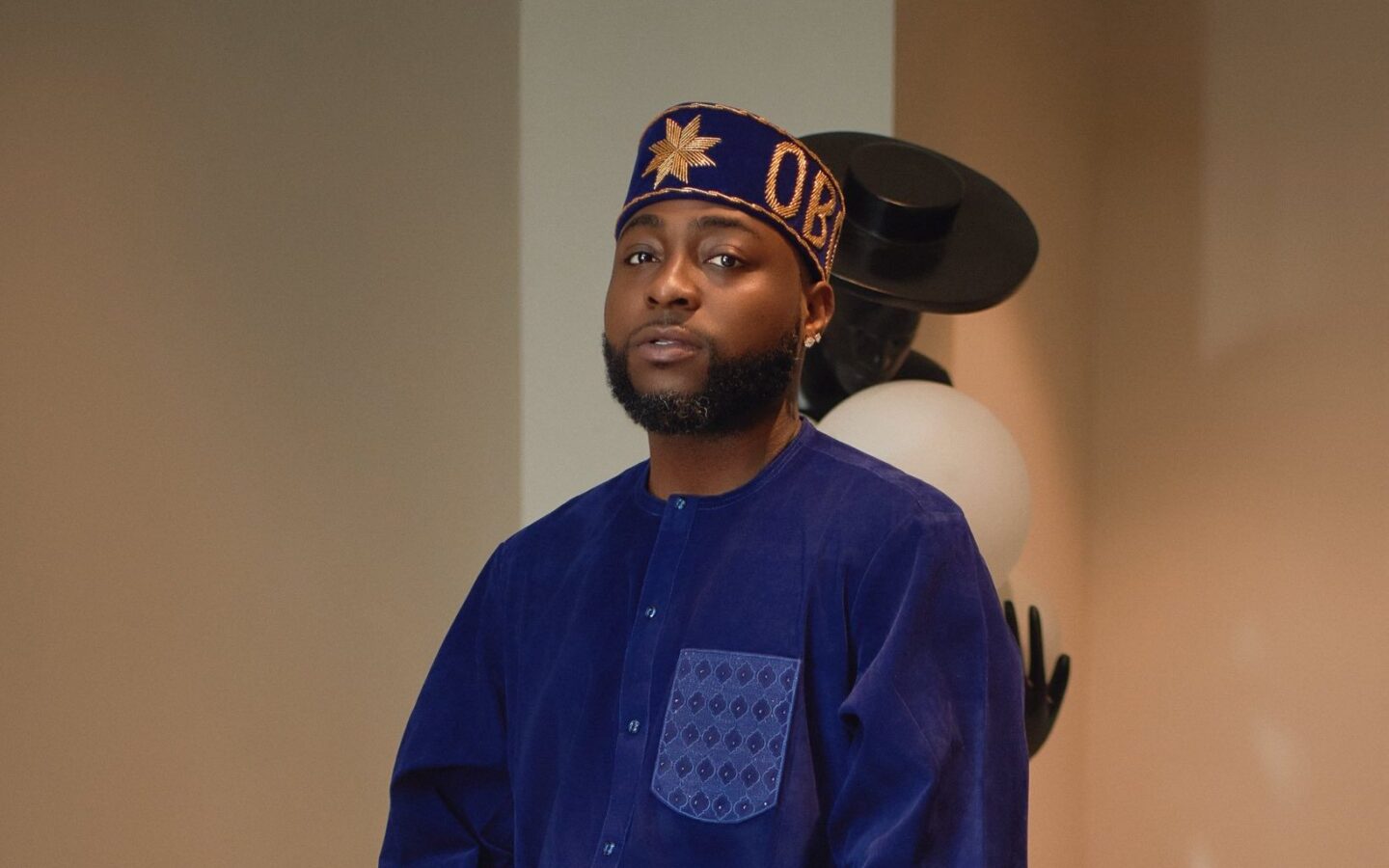
Closer to home, Davido is an interesting example of how complicated this conversation can become.
From the beginning of his career, Davido’s wealthy family background was part of the public conversation around him. He didn’t hide it or shy away from it; if anything, he owned it and made it part of his story.
His early music made it clear to anyone who might have been in doubt — this was a young man from privilege stepping boldly into an industry that had not traditionally been the obvious career path for people from his background.
Even the acronym that became synonymous with his brand, OBO — Omo Baba Olowo, loosely translated as “the child of a wealthy man.” He wore that privilege proudly.
There was no attempt to manufacture a grass-to-grace story or pretend he had come from nothing. His background was part of the package, and he embraced it.
His success arguably changed perceptions too. Suddenly, pursuing music didn’t seem quite so unconventional for the children of Nigeria’s wealthy and influential.
Since then, we have seen more silver-spoon kids venture into entertainment, with many still trying to break through and build successful careers of their own.
Interestingly, even after years in the industry, enormous commercial success and a substantial body of work, you will still hear people reduce Davido’s achievements to one thing: “Na him papa money.”
But is that entirely fair?
Yes, money can buy studio time. It can pay for promotion and the best producers. Money and connections can open doors that might remain firmly shut to someone without them. They can get you into the right rooms, put you in front of the right people and give you opportunities that others may spend years chasing.
But what all of that cannot guarantee is that people will stay locked in.
Money may get you the attention, but it cannot force people to keep listening, watching or supporting you. At some point, something beyond privilege has to keep the audience interested.
Access Is Not the Same as Achievement
Money make people listen to your music? Can it keep an audience interested year after year? Can connections manufacture longevity indefinitely?
This is where I think the nepo-baby argument can sometimes become unfair.
Privilege may explain access, but it doesn’t automatically explain achievement or longevity. Getting through the door is one thing; proving that you deserve to remain in the room is another.
There still has to be something — talent, hard work, resilience, discipline, charisma, or perhaps a combination of all of them — to sustain the opportunity once it has been given.
And perhaps that is where we are asking the wrong question. The issue shouldn’t be whether people from privileged backgrounds deserve to succeed. Of course, they should have the freedom to pursue their dreams just like everyone else.
The more important question is this: are those without the money, connections and famous surnames still being given a reasonable chance to get through the door too?
Talent Has Never Been Distributed According to Income
This, for me, is the heart of the issue.
Talent is random. It doesn’t check your father’s bank balance before choosing where to land.
The brilliant footballer could be born in a mansion or a one-bedroom flat. The extraordinary singer could attend the most expensive school in the country or an underfunded state school.
The future Olympic champion could have parents who can afford private coaching from the age of six — or parents who can barely afford the transport fare to training.

Talent does not discriminate. Opportunity, unfortunately, sometimes does. And if our systems increasingly require money before talent can even be seen, then we have a problem.
This conversation isn’t entirely new. In Nigeria, for instance, allegations about money, connections and influence affecting who gets noticed or selected for sporting opportunities — including, at times, national teams — have surfaced repeatedly over the years.
Whether every allegation is justified is another matter, but the fact that the conversation persists speaks to a wider concern about access.
And it isn’t peculiar to Nigeria. In the United States, the increasingly expensive “pay-to-play” model in youth sports has raised similar concerns. Competitive sport can cost some families thousands of dollars a year once coaching, club fees, equipment and travel are factored in.
The question then becomes: how many talented children never get far enough to be discovered simply because their families cannot afford the journey?
When the pathway to being seen becomes expensive, we risk confusing the best talent with the best-funded talent.The danger isn’t that rich children are participating. The danger is creating systems where only rich children can afford to participate properly. That distinction matters.
So Should We Blame the Nepo Babies?
I don’t think so. What are they supposed to do? Imagine telling a child: “Sorry, your father is wealthy, so you aren’t allowed to become a footballer.” Or: “Your mother is an actress, therefore you must become an accountant.”
It makes no sense.
Children don’t choose the families into which they are born any more than someone born into poverty chooses their circumstances. And parents will naturally use whatever resources they have to help their children.
If I know somebody who can give my child good career advice, wouldn’t I make the introduction? If I can afford better training, wouldn’t I pay for it? Most parents would.
So perhaps our anger is sometimes directed at the wrong people. The problem isn’t privilege itself. The problem is when privilege becomes the only reliable route to opportunity.
There will never be a perfectly level playing field. Some children will always have more money, better schools, stronger networks and greater exposure than others.
Society should still leave enough doors open for exceptional talent to walk through without having the right surname attached to it.
Access Versus Ability
And there is another uncomfortable side to this conversation. Sometimes we assume that because someone had access, they cannot also have ability. Both things can be true.
A nepo baby can be privileged and talented. A rich child can have had every advantage and still work incredibly hard (like Davido). Someone can receive an introduction through their parents and then spend the next twenty years proving that they deserved to stay in the room.
Acknowledging privilege doesn’t require us to dismiss effort. Equally, acknowledging someone’s hard work shouldn’t require us to pretend their connections played no role in getting them started.
At the End of the Day, Who Gets a Chance?
My concern isn’t that wealthy and influential children now want to sing, act, play football, become influencers or pursue careers that previous generations of elites may have considered beneath them.
Let them.
My concern is what happens to the talented child whose parents cannot afford the academy.
✅ The brilliant actor who cannot afford drama school.
✅ The athlete who cannot travel to competitions.
✅ The musician who cannot pay for studio sessions.
✅ The young person with an extraordinary idea who cannot afford to spend two years building a business without earning a salary.
What happens when even the traditional escape routes from poverty become heavily dependent on money?
If every ladder requires an entrance fee, what happens to the person who desperately needs the ladder precisely because they don’t have any money? That is the conversation I think we should be having. Not “Should rich kids be allowed to succeed?” Of course they should.
But rather:
Are we still building enough pathways for kids without access to succeed too?
Because the answer to inequality cannot be to take opportunities away from one group of children. It should be to create more genuine opportunities for everyone.
So, are nepo babies really threatening the chances of the common man?
Maybe the real threat isn’t the nepo baby. Maybe it is a society where access is becoming almost as important as talent.
This is where good leadership matters — creating an enabling environment where opportunity is not reserved for those who can afford it, and where the poor but talented child still has a pathway to be seen, nurtured and given a chance.
Because talent can come from anywhere. Our systems should make sure opportunity can reach anywhere too.
And with the coming elections, perhaps this is something worth thinking about as we head to the polls: who has credible plans to create an environment where opportunity is not determined by your surname, connections or bank balance?
Do your research, ask the right questions and make your choice.

Yes, I’m Bringing Politics Into It 😁
I know what some of you are thinking: “Aunty Lulu has come again. How did she manage to tie this one to politics and elections?” 😂.
But that, my people, is the nitty-gritty of the matter. We cannot talk seriously about equal opportunity without talking about the people who create the policies and systems that make it possible.
There cannot be meaningful change for the child of Mama sitting in her kiosk, or the young farmer cultivating his land tirelessly, if the right structures are not in place to give their children opportunities too.
Talent may be everywhere, but someone has to create the schools, sporting facilities, programmes, funding and pathways that allow that talent to flourish.
So please pardon Aunty Lulu for bringing elections into the matter again o! 😁 But this one is crucial. The choices we make today will help determine the opportunities available to our children tomorrow.
Shine your eye. Think beyond today. Think of the children. Think of the future.
Aunty Lulu
You Might Also Enjoy