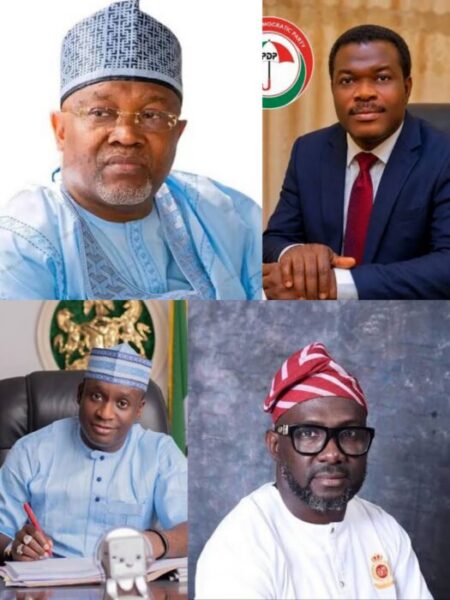
Guys, a lot has been happening in Kwara politics!
I won’t even lie, at some point I was tempted to simply bring out my popcorn, find a comfortable seat and enjoy the show because ah-ah, it has been one drama after another! 🍿😂
Then I remembered: Aunty Lulu, this is serious business.
I have no other state o! My husband is Kwaran, my children are full Kwarans, so really, where am I running to? No place to run, no place to hide. 😂
This one is personal.
So yes, the drama may be entertaining, but beneath all the political manoeuvring are decisions that will affect our communities, our children and the future of the state. That thought straightened me out very quickly.
Popcorn down. Eyes open. Let’s pay attention.
The game so far
The political landscape in Kwara is beginning to take shape ahead of the elections, and one thing is becoming increasingly clear: Kwara politics is developing a rhythm of its own.
And I quite like that.
With the various political realignments taking place, we may be looking at a much more interesting multi-party contest than many initially expected. There has certainly been plenty of movement, but at least the picture is becoming clearer and the candidates for the different offices are beginning to take shape.
A good part of that realignment has involved cross-carpeting. The APC has lost some key stakeholders to the PDP, while the PDP has also seen movement in the opposite direction.
Political musical chairs, anyone? 😁
That particular matter deserves a conversation of its own, and trust me, I will come back to it. For now, though, let’s keep our eyes on the people actually asking Kwarans for their votes.
Over the next few posts, I’ll be looking at some of them — their backgrounds, their records and what they are bringing to the table — and then, as always, I’ll leave you to make the decision that you believe is best for yourself, your children and the future of Kwara.
I must confess, though, that so far, I have not found the line-up particularly exciting.
For me, in 2026, I would like to see a stronger crop of dynamic, forward-thinking leaders who can comfortably hold their own alongside their contemporaries anywhere in the world — leaders with fresh ideas, clear vision, strong communication and an obvious understanding of the rapidly changing world we live in.
Perhaps that sounds demanding, but should we not be demanding?
At the moment, I am still waiting to be properly impressed. But elections are not won on excitement alone, so let us look beyond the posters, slogans and political noise and examine the people asking Kwarans to entrust them with public office.
Then you can decide for yourself.
The Governorship Race
At the centre of it all, of course, is the race for the highest office in the state.
The APC remains a major force, but guess who appears to have found its voice again?
The PDP.
Yes, you read that correctly.
Kwara PDP is back in the conversation, helped considerably by the political realignments that have followed the APC primaries and the emergence of what has become known nationally as the Rainbow Coalition.
You haven’t been following?
Ah. Then you have missed plenty. 😂
But because I’m feeling rather benevolent today, let me try and bring you up to speed.
The Rainbow Coalition in Kwara
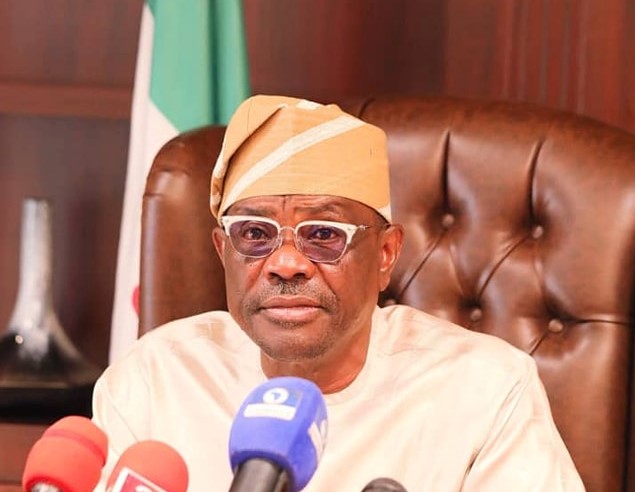
The story really begins with the fallout from within the APC, remember, the G15? .
Following the party primaries, some aggrieved members and aspirants became increasingly dissatisfied with the direction of the party.
Attempts at reconciliation did not appear to keep everyone under the same umbrella and, eventually, some found a new political home in the PDP.
And PDP, understandably, opened their umbrella. Come in, my people. 😄
That realignment has now become intertwined with the wider Rainbow Coalition, a cross-party political arrangement associated with FCT Minister and former Rivers State Governor, Nyesom Wike.
The idea is quite interesting because it does not require everybody to suddenly pack their bags and move into one political party.
Rather, politicians from different parties can remain where they are while working together around particular candidates and political interests.
At the national level, Wike has made the coalition’s immediate objective very clear: support for President Bola Ahmed Tinubu’s re-election in 2027, even from politicians who are not members of the APC.
The model first became particularly visible in Rivers State, where politicians from both the APC and PDP have operated within the same political arrangement.
Wike’s argument is essentially that party affiliation should not automatically prevent politicians from supporting candidates they believe best serve their political or public-interest objectives.
And now, versions of that political cooperation are beginning to show up beyond Rivers, including in the conversations surrounding Kwara politics.
Here is where it gets interesting.
Wike remains a PDP figure.
So while he is backing President Tinubu, who is the APC presidential candidate, he has also made it clear that this support does not mean everybody must automatically support APC candidates for governor, Senate, House of Representatives or State House of Assembly.
In other words:
Tinubu at the top… but once we come downstairs, everybody should face their own election. 😂
And therein lies the wahala.
Because APC governors have understandably questioned an arrangement in which people can campaign for an APC President while simultaneously working against APC candidates further down the ballot.
That tension has already produced very public disagreements over exactly what the Rainbow Coalition means for the APC’s wider electoral interests.
You can already see why this arrangement is causing a few political headaches.
Politics can never just be straightforward, can it?
In Kwara, the coalition has provided a platform for some former APC politicians who have now moved into the PDP and are seeking elective offices on its ticket.
And just like that, a PDP that was swept out of power during the O’Tó Gẹ́ Movement of 2019 is suddenly very much part of the political conversation again.
Politics, eh?
Never write anybody’s political obituary too quickly. 😂
I must confess, though, that I find the idea behind this Rainbow Coalition rather interesting.
I have always belonged to the “support the candidate, not merely the party” school of thought. For me, party affiliation should not be the only thing we consider when choosing our leaders.
I want to know who the individual is, what they have done, what they stand for and, most importantly, what they are capable of delivering.
Of course, political parties matter. Their structures, ideologies and records matter too. But I also believe there should be room to look beyond the party logo and properly examine the person whose name is actually on the ballot.
Perhaps that is why this Rainbow Coalition idea caught my attention.
Whether it works in practice is another matter entirely — and that, my people, is where we must keep our eyes open.
Now, Let’s Meet the Candidates
Enough of the political family tree, Let’s get to the people actually asking Kwarans for their votes.
I’ll be starting with the biggest contest in the state — the governorship race — and profiling the candidates of the APC and PDP.
Who are they?
Where are they coming from?
What have they done before now?
What exactly are they offering Kwarans?
And perhaps most importantly: why should anybody hand them the keys to Ahmadu Bello Way?
Come with me, this Kwara election gist is only just beginning.
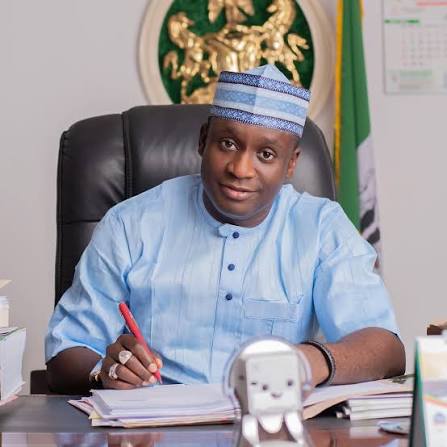
Salihu Yakubu-Danladi – APC Candidate
On the APC side, we have Rt. Hon. Salihu Yakubu-Danladi, the current Speaker of the Kwara State House of Assembly and the party’s governorship candidate for 2027.
Born on May 31, 1985, in Gwanara, Baruten Local Government Area, Danladi is an electrical and electronic engineer by training. He studied at Kaduna Polytechnic and later obtained a degree in Electrical/Electronic Engineering from the Federal University of Technology, Minna, where he also worked before moving fully into politics.
And politics, it appears, had been calling him for a while.
Before contesting for office himself, he was involved in political campaigns, including serving as Kwara North Coordinator for the Buhari Campaign Organisation in 2011. He eventually contested the Ilesha-Gwanara State Constituency seat in 2019 on the APC platform, won, and at just 34 was elected Speaker of the 9th Kwara State House of Assembly.
He was re-elected to the Assembly in 2023 and again chosen by his colleagues as Speaker of the 10th Assembly.
Then came 2026.
Following the APC governorship primary held across Kwara’s 193 wards in May, Danladi emerged as the party’s candidate after polling 94,990 votes.
Danladi comes into this contest with : political experience
What His Record Brings to the Conversation
At 41, Danladi represents a younger generation of political leadership, but he is certainly not a political newcomer.
By the time voters go to the polls, he would have spent nearly eight years representing Ilesha-Gwanara and presiding over the Kwara State House of Assembly.
That means there is actually a political record for Kwarans to examine.
As Speaker, he has overseen two Assemblies and has been involved in the legislative process surrounding state budgets, laws, executive nominations and oversight of the state government. During the first year of the 10th Assembly alone, the House reported passing nine bills and 20 motions.
His official profile also credits his representation with interventions including boreholes, classroom construction and rehabilitation, solar streetlights and road projects in his constituency.
Some of the larger figures circulated about his constituency projects — including hundreds of boreholes and extensive road rehabilitation — originate from political or official profiles, so those are claims I would personally want to see broken down project by project before taking the numbers at face value.
Because you know me: show me the work, not just the brochure. 😁
But Here Come the Questions
Danladi’s biggest advantage in terms of information available to voters is also what gives us the most to interrogate:
he has already been part of the government of Kwara State for almost eight years.
He has not been sitting somewhere outside the system telling us what he would do, he has been Speaker. That means voters can reasonably ask: what difference did his leadership of the legislature actually make?
How robust has the House been in holding the executive accountable?
What significant laws passed under his leadership have materially changed life for ordinary Kwarans?
How independent has the legislature been from the executive arm?
Those are important questions because the job of a Speaker is not simply to maintain harmony in the House.
The legislature also has an oversight responsibility — scrutinising budgets, questioning government decisions and providing a check on executive power.
So, if Danladi is now asking Kwarans to move him from the legislative arm into the Governor’s Office, his record as Speaker deserves close examination.
Then There Is the Age Question
At 41, he is considerably younger than many of the political figures we are accustomed to seeing at this level.
Ordinarily, somebody shouting “we need younger leaders!” like me should be doing a small dance at this point. 😂
But age alone is not a manifesto.
The more interesting question is whether that youth translates into the kind of leadership many younger Kwarans are asking for: fresh thinking, innovation, comfort with technology, modern approaches to job creation and a vision that recognises how quickly the world is changing.
Being young is one thing.
Governing young is another.
Continuity or Something Different?
Perhaps one of the most important questions surrounding Danladi’s candidacy is his close association with the current APC administration.
He has served as Speaker throughout Governor AbdulRahman AbdulRazaq’s time in office and is now carrying the governing party’s flag into the 2027 election. The Assembly members themselves publicly endorsed his candidacy after the primary.
So voters will naturally want to know:
Is he offering continuity?
If so, which parts of the current administration does he believe should continue?
And where does he believe Kwara needs to change direction?
Because after eight years of one administration, “more of the same” or “something different” is a conversation that will inevitably come up.
My Questions for Danladi
For me, I want to hear much more about his own vision.
Not APC’s vision.
Not the current governor’s achievements.
His.
What does a Yakubu-Danladi government look like?
What are his priorities for security, education, healthcare, agriculture, infrastructure and employment?
How does he plan to grow Kwara’s economy and internally generated revenue?
What will he do differently from the administration in which he has already played such a prominent role?
And perhaps most importantly, after almost eight years sitting at the head of the legislature, what has he learnt about what is working in Kwara — and what desperately needs fixing?
Those answers, more than age, slogans or party colours, will tell us much more about the candidate asking to become Kwara’s next governor.
Because again, my people, this election cannot simply be about who gets the ticket.
The real question is:
What exactly are you planning to do with the job when you get there?
Niow, lets meet his deputy.
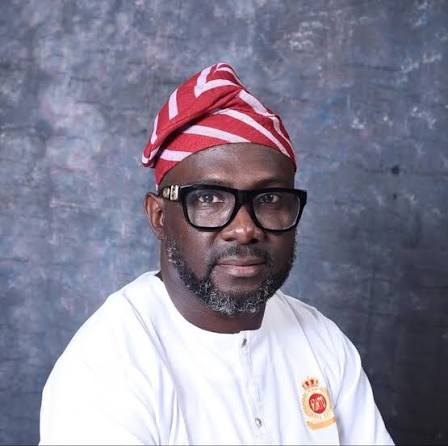
Hon. David Ogunniyi – APC Deputy Governorship Pick
Standing alongside Yakubu-Danladi on the APC ticket is Hon. David Oluwaseun Ogunniyi, popularly known as Adato.
And his résumé is actually quite interesting.
Born on July 24, 1977, Ogunniyi hails from Offa and currently represents the Balogun/Ojomu Constituency in the Kwara State House of Assembly. He was elected in 2023 and presently serves as Chairman of the House Committee on Energy, Deputy Chairman of the Committee on Education and Human Capital Development, as well as a member of the Youth, Sports and Information Committee.
But politics is actually the more recent chapter of his career.
Before entering elective politics, Ogunniyi spent many years in the private sector and rose to senior executive level, including serving as a Country Managing Director and West Africa Regional Leader for an American multinational company. His professional background spans administration, sales, corporate leadership and strategic management.
Academically, he has an HND in Computer Science from Kwara State Polytechnic, a degree in Policy and Strategic Studies from Covenant University and postgraduate study in Conflict, Peace and Strategic Studies at Afe Babalola University. He is also an alumnus of the Lagos Business School Advanced Management Programme.
So, at least on paper, Adato comes into this ticket with a rather unusual combination:
corporate executive experience, development planning and now legislative experience.
What He Brings to the Ticket
For me, the most obvious strength in Ogunniyi’s profile is his private-sector background.
Government desperately needs people who understand efficiency, targets, performance management and how organisations actually deliver results.
And somebody who has operated at senior management level across West Africa should, in theory, be accustomed to making decisions, managing teams, working with budgets and being held accountable for outcomes.
That could complement Danladi quite nicely.
Danladi has spent most of his recent career inside politics and the legislature. Ogunniyi spent a significant portion of his career outside government before entering politics.
So you potentially have one person who understands the political machinery and another who has experienced the corporate world.
On paper, that is an interesting combination, But the real question is what happens when all that experience meets the realities of government.
His Community Development Credentials
Ogunniyi has also been involved in development initiatives in Offa, including the Offa Economic Development Committee, which worked on the town’s 2022–2032 development plan.
That catches my attention because I am particularly interested in candidates who can think beyond four-year election cycles.
Development planning requires asking questions such as: Where should this community be in ten years? What industries should we be attracting? What infrastructure will we need? Where will the jobs come from?
Those are exactly the kinds of conversations I would like to hear much more of during this election.
But Again, We Must Ask Questions
Ogunniyi entered the Kwara House of Assembly only in 2023, which means his record in elective office is considerably shorter than Danladi’s.
So while his private-sector experience may be impressive, voters should still examine what he has actually done since entering public office.
What legislation has he influenced?
What has his Energy Committee accomplished?
What measurable difference has his representation made in Balogun/Ojomu?
And perhaps more importantly, what does he bring specifically to the office of Deputy Governor?
Because I think sometimes we treat the position of Deputy Governor in Nigeria like political plus-one. 😁
It should be much more than that. If this ticket wins, what portfolio will Ogunniyi actually lead?
Economic development? Investment? Technology? Energy? Human capital?
His résumé suggests several areas where he could potentially contribute, but I would like the campaign to tell us clearly how that experience fits into their governing plan.
And Then There Is the Ticket Itself
Danladi is from Kwara North.
Ogunniyi is from Offa in Kwara South.
That gives the APC ticket an interesting geographical spread, but beyond geography, I want to know what the partnership actually represents in terms of governance.
What is the shared vision?
Where does Ogunniyi fit into it?
And will he be a genuinely active Deputy Governor with clear responsibilities, or simply somebody whose name completes the ticket?
Because if you are asking people to elect two individuals together, then surely we should know what both of them are coming to do.
So yes, Adato’s profile gives me quite a few things to examine. Because CVs can open the door. Delivery is what keeps you in the room.
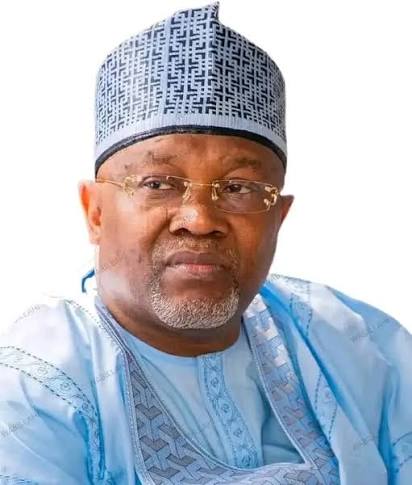
Engr. Sulaiman Bolakale Kawu Agaka – PDP Candidate
Next is the PDP candidate, Engr. Sulaiman Bolakale Kawu Agaka, popularly known as Kale Kawu.
Now, unlike many of the names we are used to seeing on the political circuit, Kawu does not come into this race with a long history of elective politics. His background is predominantly professional — engineering, public administration and Nigeria’s power sector.
Born on May 1, 1969, into the Agaka ruling family of Ilorin, Kawu is the Dan Iyan Ilorin and also holds the title of Hasken Lafiagi.
An electrical engineer by training, he spent many years in Nigeria’s power sector and rose through the ranks of the Rural Electrification Agency, serving at different times as Zonal Coordinator, Director of Projects, Director of Procurement and Director of Monitoring and Evaluation. His career therefore placed him around the planning, procurement, monitoring and implementation of public infrastructure projects.
In May 2026, the PDP adopted him as its consensus governorship candidate after consultations involving the other aspirants, marking his transition from a largely professional and community-facing career into frontline partisan politics.
So, what does Kale Kawu bring to the table?
The Strengths on Paper
The first thing that jumps out at me is his technical and public-sector experience.
Kwara has its fair share of infrastructure challenges, so having someone who has spent decades working around electrification, project implementation, procurement and monitoring is certainly relevant experience to examine.
There is also the fact that he has worked within federal institutions and risen to senior management level. Whatever one thinks of government bureaucracy — and please, let us not start that discussion today 😂 — navigating it for that long should at least mean he understands how public institutions, budgets, procurement processes and large projects work.
His supporters also point to his community involvement, philanthropy and interventions in areas such as education, youth empowerment and infrastructure. Kawu himself has presented those activities as evidence of a record of service before seeking elective office.
And then there is his relative newness to elective politics.
Depending on how you look at it, that could be attractive to voters looking for somebody whose résumé was built largely outside the usual political cycle.
But — and there is always a but —
The Questions
The same thing that may work in his favour also raises one of the biggest questions around his candidacy:
Can professional competence translate into political leadership?
Running the Rural Electrification Agency is not the same thing as running Kwara State.
A governor must manage education, healthcare, agriculture, security coordination, local government relationships, internally generated revenue, civil servants, political interests and, yes, the occasionally dramatic characters that come with Nigerian politics. 😁
Kawu has considerable experience within public administration, but he does not have an established record in elected office. His governorship campaign is therefore asking voters to make the leap from “experienced technocrat” to “capable political chief executive.”
That is not necessarily a weakness, but it is something voters should interrogate carefully.
There is also the question of political identity and independence.
His emergence as PDP candidate has inevitably placed him within the wider political influence of former Senate President Bukola Saraki, who announced the consensus arrangement that produced him.
And in Kwara, where memories of the 2019 O’Tó Gẹ́ movement and the rejection of the old political order remain part of the political conversation, voters may want to know something very clearly:
Who exactly is Kale Kawu politically?
What are his ideas?
What does he want to do differently?
And if elected, how independently would he govern?
Those, for me, are more important questions than simply whether he belongs to PDP, APC or Rainbow anything. 😂
My Takeaway
On paper, Kale Kawu presents an interesting résumé: an engineer with decades of public-sector experience, particularly in infrastructure and rural electrification, now stepping properly into partisan politics.
But a good résumé is only the beginning. I want to hear specifics.
What is his plan for Kwara’s economy? Agriculture? Education? Healthcare? Jobs for young people? Infrastructure beyond electrification? And how does he intend to turn decades of federal public-service experience into measurable results at state level?
Those are the conversations I hope this campaign will force all the candidates to have.
Because please, “I am qualified” cannot be the manifesto.
We need to know: qualified to do what, how, and with whose money? 😁
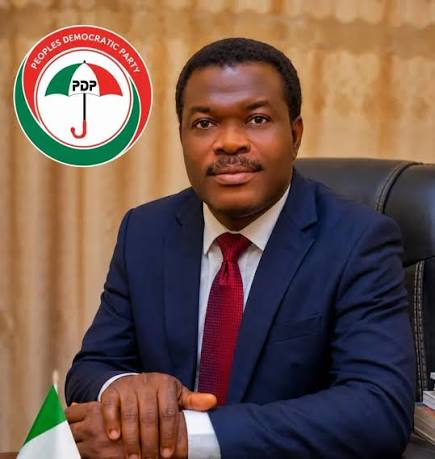
Rev. Cornelius Fawenu – PDP Deputy Governorship
Running alongside Kale Kawu on the PDP ticket is Reverend Cornelius Olaosebikan Sunday Fawenu.
And his profile is quite different from the others we have looked at so far.
Fawenu is a clergyman, community leader and political organiser from Babaloma in Ifelodun Local Government Area, Kwara South. He studied Biochemistry at Ahmadu Bello University, Zaria, and has spent more than two decades in Christian ministry. He is the Presiding Pastor of Oasis of Wisdom Bible Church in Ilorin and has also served as Secretary of the Christian Association of Nigeria in Kwara State.
He was unveiled in July 2026 as the running mate to PDP governorship candidate Engr. Sulaiman Bolakale Kawu Agaka after consultations within the party. At the time of his selection, he was also serving as the PDP Chairman for Kwara South Senatorial District.
So what exactly does a pastor bring to a governorship ticket?
Quite a bit, potentially.
But, as always, we must look beyond the title.
What He Brings to the Ticket
The first thing that stands out is his grassroots reach.
Anyone who has spent years leading a church, working within CAN structures and engaging communities across the state would naturally have experience dealing with people from very different backgrounds.
And leadership in that environment is not simply about standing behind a pulpit on Sunday morning.
It involves counselling, conflict resolution, community engagement, managing people, building trust and sometimes mediating disagreements that make political quarrels look like small chops. 😁
His public profile has also been associated with advocacy around peaceful coexistence, interfaith relations, community development and good governance. Those are qualities the PDP itself highlighted when announcing his selection.
There is also a political dimension.
Fawenu is not simply a cleric suddenly parachuting into an election. He has already been active within the PDP structure and, before being selected as running mate, held a leadership role in Kwara South.
That means he comes into the ticket with some understanding of party organisation and grassroots mobilisation.
The Religious Balance Conversation
We cannot discuss his nomination without acknowledging the obvious political calculation.
Kawu is Muslim.
Fawenu is Christian.
And the PDP has openly described the ticket as one intended to reflect religious balance, alongside geographical and political considerations.
That may be politically significant in a diverse state like Kwara. But personally, I would hope the conversation goes beyond:
“One Muslim, one Christian. Everybody is happy.” 😁
Because representation matters, yes. but representation without competence is just decoration.
The real question should be what Rev. Fawenu will actually contribute to governance if the ticket is elected.
The Questions
This is where his profile becomes particularly interesting.
Unlike Kawu, he does not bring decades of technical public-sector experience.
Unlike Danladi, he does not have years of legislative leadership.
Unlike Ogunniyi, his résumé is not built around multinational corporate management.
His strongest public credentials are in ministry, community engagement, peace-building and political organisation.
So voters are entitled to ask:
How does that translate into the day-to-day administration of a state? What experience does he have managing complex public institutions, large budgets or government programmes? What areas of government would he take responsibility for?
Would his background naturally position him around peace-building, social development, community relations or human-capital programmes?
Those are the details I would like to hear from the PDP campaign. Because once again, the office of Deputy Governor should not simply be about balancing a ticket.
What Does He Add to Kawu?
This, for me, is perhaps the most important question about any running mate.
Kawu already brings technical and public-sector experience. So what has Fawenu been chosen to add?
If elected, what would Rev. Fawenu actually be responsible for?
What particular part of the administration would benefit from his experience?
Because, as I said when looking at the APC ticket, I really do not want us treating Deputy Governors like political plus-ones.
Come to the party, take pictures, smile beside Oga and disappear. 😁
No.
If two people are asking for our votes together, then I want to know what both of them are coming to do.
At a Glance: How the Two Tickets Compare
| APC Ticket | PDP Ticket | |
|---|---|---|
| Governorship Candidate | Salihu Yakubu-Danladi – 41, electrical engineer, two-term legislator and Speaker of the Kwara State House of Assembly since 2019. His strongest experience is in politics, legislation and state governance. (Channels Television) | Engr. Bolakale “Kale” Kawu – 57, electrical engineer and retired senior public servant with decades of experience in the power sector and Rural Electrification Agency. His background is strongest in public administration, infrastructure and technical management. (Punch Newspapers) |
| Running Mate | Hon. David Ogunniyi “Adato” – 49, legislator and former senior private-sector executive. He brings corporate management, strategy, technology and more recent legislative experience to the ticket. | Rev. Cornelius Fawenu – 53, cleric, former Kwara CAN secretary and PDP Kwara South leader. He brings grassroots mobilisation, community leadership, peace-building and religious/community engagement. (Punch Newspapers) |
| Ticket in a nutshell | Political/legislative experience + private-sector management | Technical/public-service experience + grassroots/community leadership |
| Big question | Can experience within the existing political system translate into a sufficiently distinct programme for the next administration? | Can strong professional and community credentials translate successfully into executive political leadership? |
So there we have them.
Two very different tickets.
On the APC side, you have a career politician and legislator paired with a former corporate executive who has recently entered elective politics.
On the PDP side, you have a career technocrat and public servant paired with a cleric and grassroots political organiser.
Interesting combinations on both sides, but as I keep saying, impressive CVs are only the beginning.
The real question for Kwarans is: what will each combination actually do with the mandate if given the opportunity?
And that, my people, is where we need to start listening very carefully.
Now, Over to You
I think I’ve done my work here for now 😁. I’ve laid out the candidates, their backgrounds and some of the questions worth asking. The rest, my people, is for you to think about.
By the way, can I humbly recommend a proper photoshoot for our candidates? Finding good, clear, current photographs of some of you was a whole assignment on its own. 🥵😂 In 2026, abeg, we can do better.
Okay, Aunty Lulu is done here. 😁
Next edition, we move on to the Senate.
See you there. 👀
Aunty Lulu
If this conversation caught your attention, here are a few more Aunty Lulu reads on Kwara politics, leadership and the issues shaping our future.
Nigeria Decides 2027: The Curious Case of Kwara and the APC’s Political Drama
Kwara 2027 Gubernatorial Race: Early Contenders, Rankings & Political Analysis
Swinging Doors, Open Gate: a salute to my father.


